
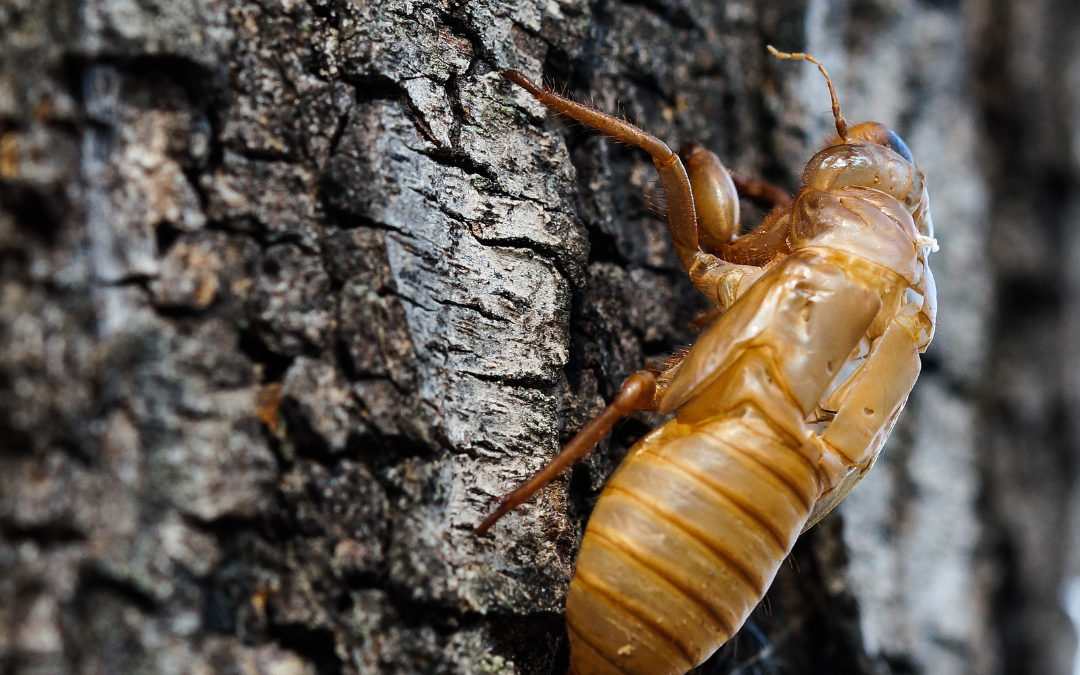
The emergence of the periodical cicadas has been in the news lately. This year, two separate broods of periodical cicadas will emerge: the Illinois Brood and the Great Southern Brood. The Illinois Brood emerges every 17 years, and last occurred in 2007. This is the brood that will primarily affect our area. The Great Southern brood is on a 13-year cycle and last appeared in 2011. This brood will overlap with the Illinois brood, mainly in Southern and Central Illinois. Cicadas emerge in May and can be numerous, up to several hundred per square yard in areas with older trees. After emergence, nymphs crawl up a tree and shed their skins before emerging as adults. After emerging, they crawl or fly higher up in the canopy, and the males produce a thunderous mating call that can be deafening. After mating, the females lay their eggs in the outer small twigs of tree and shrub branches using a sturdy ovipositor, which drills into pencil-sized stems in last year’s growth. After hatching, the small nymphs tunnel underground to feed on tree roots for the next 17 years.
Cicadas do minimal damage to landscape plants. There can be some damage from girdling stems due to ovipositor damage that can usually be pruned out. Suppose you want to protect your ornamental plants, such as Japanese Maples, standard hydrangeas, or crabapples. In that case, we can install light permeable row cover material to protect the plants without hindering their growth. Covering the trunks below the heads snugly is important so cicadas can’t crawl in. They are weak fliers and tend to crawl and hop rather than fly. These can be removed after the mating cycle is completed in late June. After the end of June, cicada activity above ground will at least be over until 2041.
Other effects from the cicadas will include pets eating them, piles of dead cicadas needing to be removed, and, of course, the nuisance of noise from the mating calls. We will also benefit from free spring aeration from the tunnels and fertilization from the decaying bodies of dead cicadas. The number of individuals emerging in the Eastern US will be from billions to trillions. The two broods have not appeared together since 1803, making this a once-in-a-lifetime wildlife experience!